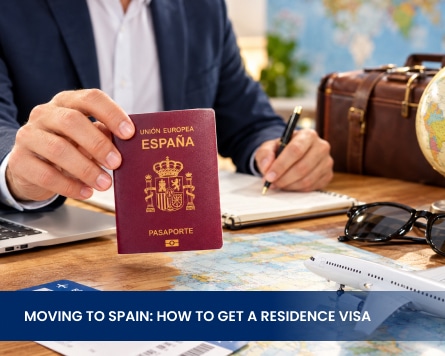
If you’re moving to Spain, choose the right Spain residence visa based on your reasons for relocating, such as working, starting a business, studying, joining family, or living without working. To apply, you generally need to meet the relevant Spain residence visa requirements, prepare the required documents, submit your application through the correct authority, and complete the required residence formalities after approval.
What Is a Spain Residence Visa?
A Spain residence visa allows eligible non-EU nationals to live in Spain for a longer period under a specific immigration category. The right visa depends on your purpose for moving and whether you plan to work in Spain.
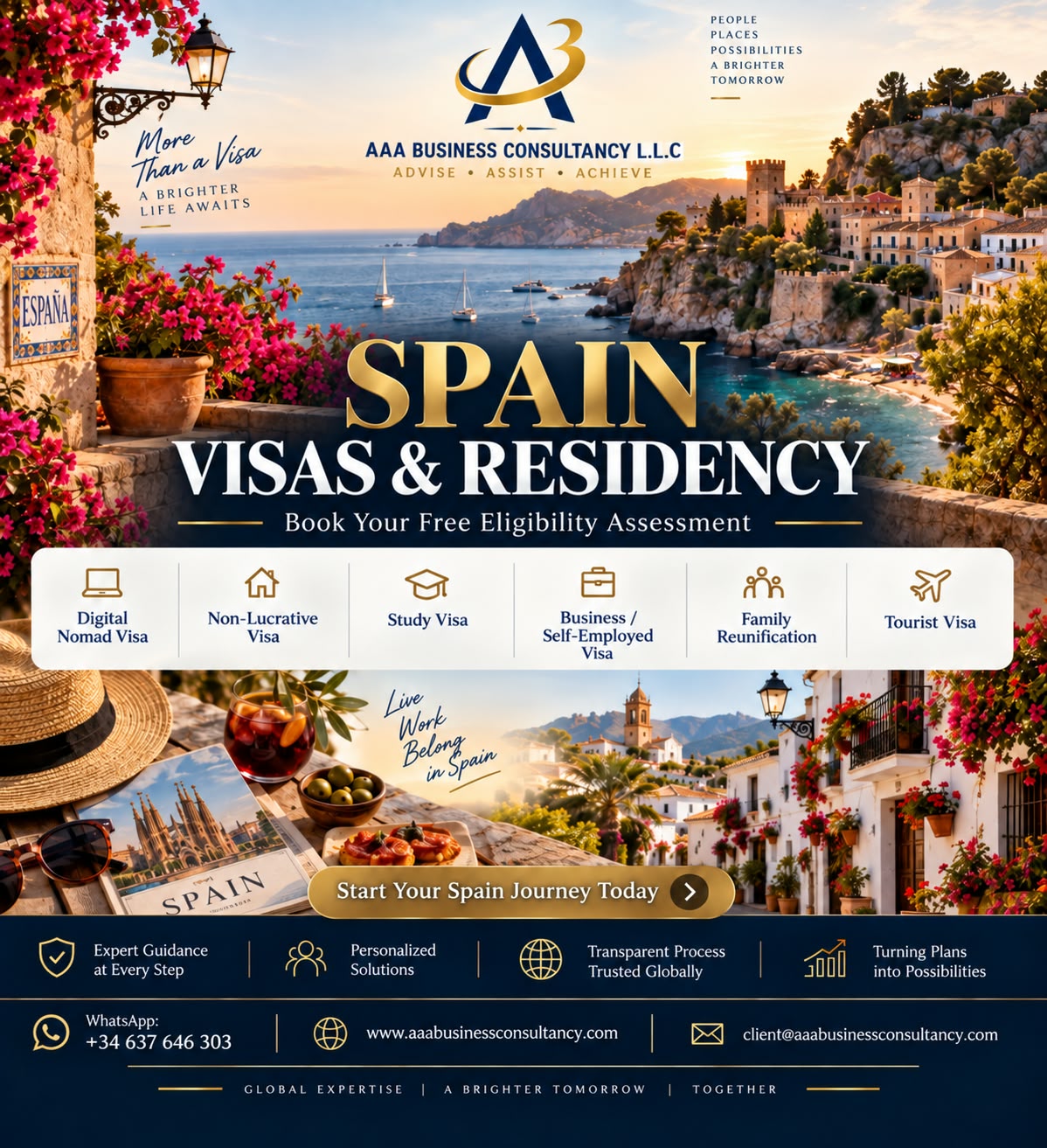
There isn’t one universal Spain residency visa for everyone. Spain offers different residence routes for employment, self-employment, study, family reunification, non-lucrative residence, and other qualifying situations.
That’s why identifying the correct route should be your first step.
Which Spain Residence Visa Do You Need?
The best route for you depends on what you plan to do after moving to Spain.
Here are some common options:
|
Residence Route |
Who It May Suit |
Work Permission |
|
Non-lucrative residence |
People who want to live in Spain without working |
Generally no |
|
Employment residence |
People moving to Spain for qualifying employment |
Yes, subject to authorisation |
|
Self-employment residence |
Entrepreneurs and qualifying self-employed professionals |
Yes |
|
Study residence |
Students enrolled in qualifying programmes |
Subject to applicable conditions |
|
Family-based residence |
Eligible family members of residents or citizens |
Depends on the route |
|
Other specialised routes |
Certain highly qualified professionals, researchers and other applicants |
Depends on the category |
For example, the non-lucrative route is for people who want to reside in Spain without gainful employment and can demonstrate sufficient financial means.
What Are the Spain Residence Visa Requirements?
Spain residence visa requirements vary by route. Nevertheless, you may need several common documents, including:
- A valid passport
- Completed application forms
- Recent photographs
- Proof of financial resources, where required
- Health insurance, where required
- Medical certificate, where required
- Criminal record certificate, where required
- Proof supporting the purpose of residence
- Proof of accommodation, where applicable
- Documents relating to employment, business, studies, or family relationship, depending on the route
- Proof of payment of the applicable fees
In addition, documents issued outside Spain may need to be apostilled or legalized and officially translated where required.
Do All Applicants Have the Same Requirements?
No.
This is an important point when planning your Spain residency requirements.
Someone applying for a work-based route will have different requirements from someone applying for non-lucrative residence. Similarly, a student or family member may need a different set of supporting documents.
Therefore, don’t rely on a general checklist alone. Check the requirements for the specific residence category you intend to use.
How to Apply for a Spain Residence Visa?
The process for applying for a Spain residence visa generally involves several stages.
1. Identify Your Residence Category
First, determine why you want to move to Spain.
For example, you may want to:
- Work for a Spanish company
- Start or operate a business.
- Work as a self-employed professional
- Study in Spain
- Join a qualifying family member.
- Live in Spain without working.
Your purpose determines which immigration route you should consider.
2. Check Your Eligibility
Once you know the route, review its eligibility requirements.
These may relate to your finances, employment, qualifications, health insurance, criminal record, professional activity, family relationship, or other conditions.
For example, a self-employment application may require evidence of your proposed business activity, professional qualifications or experience, and investment and financial resources.
3. Prepare Your Documents
Gather your passport, forms, financial records, certificates, insurance documents, and other supporting paperwork.
Also check whether your documents need translation, apostille, or legalization. Handling these requirements early can help prevent unnecessary delays.
4. Submit the Application
The submission process depends on the type of residence application and where you’re applying from.
If you’re outside Spain, you may need to submit your application through the relevant Spanish consular authority. Other residence procedures may involve Spanish authorities.
Therefore, confirm the correct application channel before submitting your documents.
5. Complete the Required Formalities
After approval, you may still have additional steps to complete, particularly after arriving in Spain.
These requirements depend on your residence category, so follow the instructions attached to your specific authorization.
How Much Money Do You Need to Move to Spain?
No single financial requirement applies to every Spain residence permit.
The amount depends on the residence route and your individual circumstances.
For example, the non-lucrative residence route has a financial-means requirement based on Spain’s applicable IPREM threshold. Applicants must demonstrate sufficient resources for themselves and, where applicable, accompanying family members.
However, the financial requirements for one residence category should not automatically be applied to another.
That’s why you should check the current financial threshold for your specific route before preparing your application.
Can You Move to Spain Without Working?
Yes, Spain has a residence route specifically for people who want to live in Spain without gainful employment.
The non-lucrative residence visa may suit applicants who can demonstrate sufficient financial means and meet the other requirements.
However, this route is not designed as a general work visa. If you plan to work or run a business in Spain, you should consider a route that permits the relevant activity.
Can You Work in Spain With a Residence Visa?
It depends on the type of residence authorization you receive.
Employment-based and self-employment routes are designed around permitted work activities, while some other residence categories have restrictions.
For example, a non-lucrative residence authorization is intended for residence without carrying out gainful work or professional activity.
Therefore, don’t assume that having a Spain residence visa automatically permits you to work.
What Documents Should You Prepare Before Applying?
Preparing your documents early can make the process more organized.
Depending on your route, your checklist may include:
Personal Documents
- Passport
- Visa application forms
- Photographs
- Civil status documents, where applicable
Financial Documents
- Bank statements
- Income evidence
- Pension or investment evidence, where relevant
- Other proof of financial resources
Legal Documents
- Criminal record certificate
- Medical certificate, where required
- Apostille or legalization
- Official translations, where required
Purpose-Specific Documents
These depend on why you are moving.
For example:
Employment: employment contract and relevant employer documentation.
Self-employment: business plan, professional credentials and evidence relating to the proposed activity.
Study: admission or enrolment documentation from the relevant educational institution.
Family residence: documents proving the qualifying family relationship.
What Can Delay a Spain Residency Application?
Several practical issues can complicate the process.
- Choosing the wrong residence category
- Missing supporting documents
- Expired certificates
- Incorrect application forms
- Translation or legalization issues
- Inconsistent information across documents
For this reason, review your application carefully before submitting it. A complete, consistent document set can make the process easier to manage.
Spain Residence Visa vs. Spain Residence Permit: What’s the Difference?
The terms Spain residence visa and Spain residence permit are often used interchangeably, but they can refer to different parts of the immigration process.
|
Spain Residence Visa |
Spain Residence Permit/Authorisation |
|
Can be issued for qualifying long-term entry and residence purposes |
Relates to the authorisation to reside under a specific immigration category |
|
Often involves a Spanish consulate when applying from abroad |
May involve immigration authorities in Spain |
|
Connected to a particular residence purpose |
Sets out the conditions of the person’s residence |
|
Requirements depend on the visa category |
Requirements depend on the underlying residence authorisation |
The exact terminology and procedure depend on your immigration category.
What Are the Benefits of Getting Spanish Residency?
Obtaining the appropriate residence status can allow eligible non-EU nationals to establish their life in Spain under the conditions of their authorization.
Depending on the route, residency may allow you to:
- Live in Spain legally.
- Work or operate a business where authorized
- Study under the applicable conditions
- Reside with qualifying family members.
- Access services available to residents, subject to eligibility
- Build a longer-term residence history in Spain.
However, the rights attached to residency depend on the specific immigration status you receive.
How Can You Prepare for the Spain Residency Process?
A few practical steps can help you apply more efficiently.
Start With Your Goal
Before looking at forms, clearly define why you want to move.
Are you relocating for work, business, family, study, or a non-working lifestyle?
Build a Route-Specific Checklist
Once you’ve identified your route, create a document checklist specifically for that category.
This is much more useful than downloading a generic Spain visa checklist.
Check Your Documents Early
Check passport validity, certificates, financial evidence, translations, and legalization requirements before your intended submission date.
Check Current Rules
Spanish immigration requirements can change. Always verify the current requirements and procedures before applying.
Plan for Your Move
Visa preparation is only one part of relocating.
You may also need to consider accommodation, health insurance, banking, tax matters, transportation, and other practical aspects of settling in Spain.
How Can AAA Business Consultancy Help With Spain Residency?
Moving to another country involves more than filling out an application form. The biggest challenge is understanding which residence route fits your circumstances and what documentation it requires.
AAA Business Consultancy can help applicants understand the Spain residency process, identify the relevant requirements, and organize the documentation needed for their chosen route.
If you’re planning to move to Spain and want help understanding your Spain residence visa options, contact AAA Business Consultancy to discuss your circumstances and the next steps.
Conclusion
Getting a Spain residence visa starts with choosing the correct residence route for your purpose. Whether you’re planning to work, start a business, study, join family, or live in Spain without working, each route has its own eligibility criteria and documentation.
So, before applying, take time to check your eligibility, prepare the correct documents, and understand the procedure for your chosen category. Since immigration requirements can change, it’s also important to verify the latest rules before submitting your application.
With the right route and proper preparation, you can approach your move to Spain with a clearer understanding of what comes next.
How long does it take to get a Spain residence visa?
Processing times vary by residence category, application location, and individual circumstances. Check the current guidance for your specific route.
Can I apply for Spanish residency from outside Spain?
Yes, you can initiate certain residence visa applications through the appropriate Spanish consular authority outside Spain. The exact process depends on the visa category.
Can I bring my family to Spain with a residence visa?
Some Spanish residence routes allow qualifying family members to accompany or join the main applicant. The eligible family members and requirements depend on the specific route.
Is it possible to get Spanish residency without buying property?
Yes. You don’t need to buy property to obtain Spanish residency. Eligibility depends on the residence route you apply for and its specific requirements.
Do I need health insurance for a Spain residence visa?
Health insurance is required for certain residence categories, including the non-lucrative residence route. The exact insurance requirements depend on the visa category.
Can a Spain residence visa lead to permanent residency?
Certain temporary residence periods can contribute toward eligibility for long-term residence if the applicant meets the applicable legal requirements. Long-term residence has its own conditions and should be considered separately from the initial residence visa.