Self-Employed Visa Spain: A Route for Entrepreneurs and Independent Professionals
The Self-Employed Visa Spain is an important immigration option for non-EU nationals who want to establish their own business, provide professional services or work independently while living in Spain.
Spain attracts entrepreneurs, freelancers and business owners because of its lifestyle, access to the European market and opportunities for international business development.
However, the Self-Employed Visa Spain immigration process requires careful preparation. Applicants must normally demonstrate that their proposed activity is genuine, viable and compliant with Spanish regulations.
At AAA Business Consultancy L.L.C, we assist applicants with Spain immigration, residency procedures, document preparation and professional guidance throughout their Self-Employed Visa Spain journey.
What Is the Self-Employed Visa Spain?
The Self-Employed Visa Spain allows qualifying non-EU nationals to live in Spain while carrying out an independent professional or business activity.
Unlike a traditional employment visa, where a person works for an employer, the Self-Employed Visa is designed for people who intend to generate income through their own professional or commercial activity.
This Spain immigration route may be suitable for:
Entrepreneurs starting a business in Spain
Independent consultants
Freelancers and professional service providers
Small-business owners
Qualified professionals operating independently
Applicants establishing a commercial activity in Spain
Every Self-Employed Visa Spain application is assessed according to the proposed activity and the applicant’s personal and professional circumstances.
Self-Employed Visa Spain Immigration Requirements
The Spanish immigration authorities generally want to see that the proposed activity is properly planned and financially realistic.
Applicants may need to demonstrate:
Relevant professional qualifications or experience
A clear description of the proposed business activity
Sufficient financial resources or investment
Required licences or professional authorisations
A realistic business and financial plan
Compliance with Spanish regulations
Appropriate documentation regarding the applicant’s background
A genuine intention to operate the activity in Spain
A strong Self-Employed Visa Spain immigration application should show how the business will operate and how the applicant is qualified to manage the proposed activity.
The Business Plan for a Self-Employed Visa Spain Application
The business plan can be one of the most important parts of the Self-Employed Visa Spain application.
It should provide a clear explanation of the proposed activity, including the nature of the business, target customers, expected investment, estimated expenses, projected income and operational structure.
The business plan should also be consistent with the applicant’s professional experience, qualifications and available financial resources.
For Spain immigration purposes, simply presenting a business idea may not be sufficient. The supporting documents should demonstrate that the proposed activity has been properly researched and can realistically operate in Spain.
Documents for Self-Employed Visa Spain
The documents required for a Self-Employed Visa Spain immigration application can vary depending on the applicant’s nationality, country of residence, proposed activity and the Spanish Consulate handling the application.
Typical documentation may include:
Valid passport
Completed immigration application forms
Criminal record certificate
Medical certificate
Proof of professional qualifications or experience
Business plan
Evidence of available investment
Financial documentation
Evidence relating to the proposed commercial or professional activity
Required licences or permits
Proof of accommodation or other supporting documents where applicable
Spanish translations of foreign documents when required
Legalisation or Apostille where applicable
Proper document preparation is important because inconsistencies can create difficulties during the Self-Employed Visa Spain immigration process.
Self-Employed Visa Spain Application Process
The Self-Employed Visa Spain process generally involves obtaining the appropriate residence and self-employment authorisation before completing the corresponding visa procedures.
The exact steps may vary according to the competent Spanish authorities and Consulate.
After approval and arrival in Spain, the applicant may also need to complete additional immigration and administrative procedures, including Social Security registration and obtaining the relevant residence documentation.
Applicants should carefully follow all deadlines mentioned in their approval and visa documentation.
Self-Employed Visa Spain and Immigration to Spain
For many entrepreneurs, the Self-Employed Visa Spain is more than simply a visa application. It represents the beginning of a longer immigration and residency journey in Spain.
Applicants should consider not only the initial visa but also matters such as:
Business registration
Social Security
Tax obligations
Residence documentation
TIE procedures
Renewals
Business compliance
Family relocation, where applicable
Planning these matters early can make the overall Spain immigration process more organised.
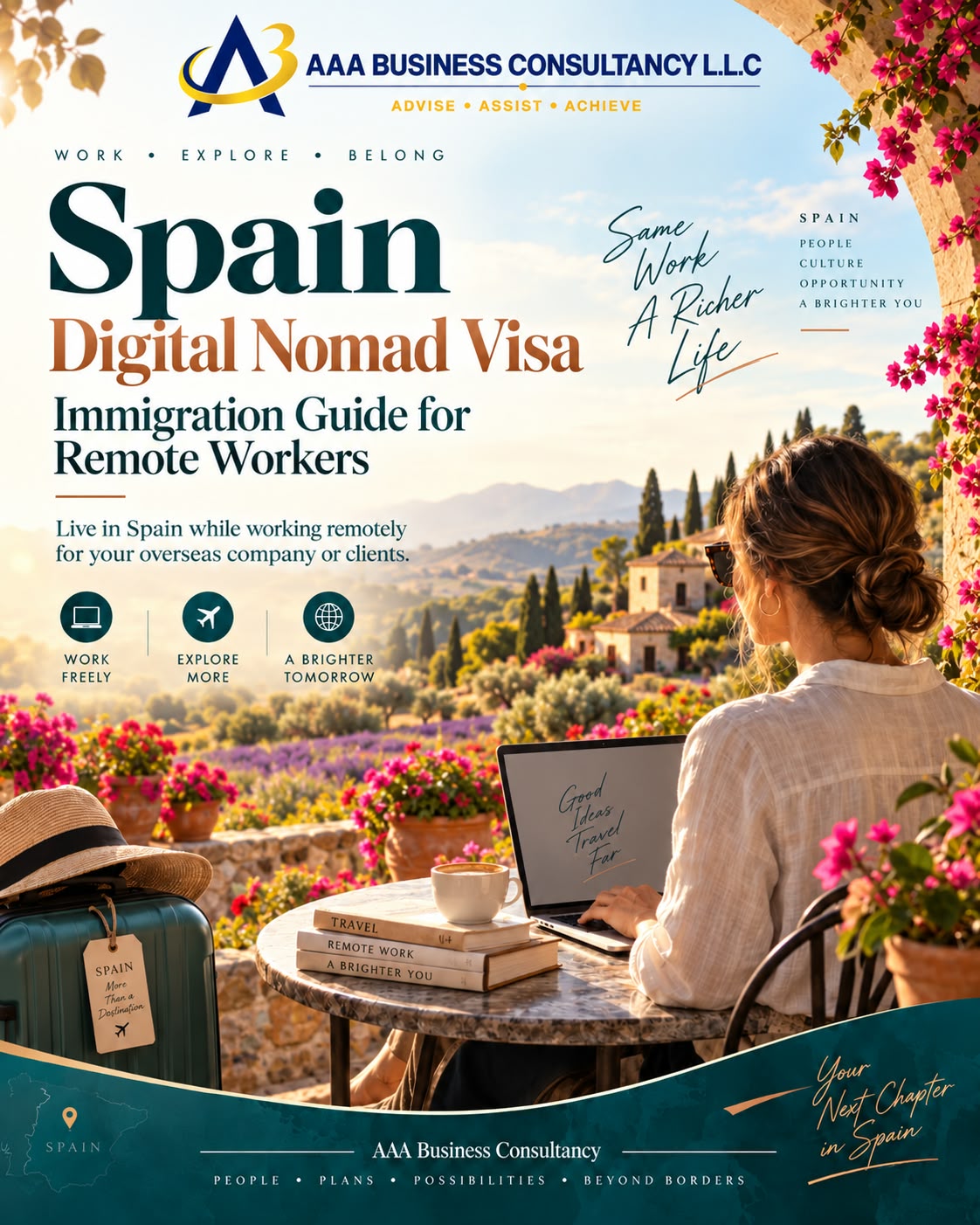
Self-Employed Visa Spain vs Digital Nomad Visa
The Self-Employed Visa Spain and Spain’s Digital Nomad Visa are different immigration routes.
A Self-Employed Visa Spain is generally intended for applicants who want to establish or conduct their own commercial or professional activity in Spain.
A Digital Nomad Visa is primarily connected with qualifying remote work performed under Spain’s international teleworking immigration framework.
The appropriate route depends on factors such as:
Where your clients are located
Where your business activity takes place
How you earn your income
Whether you operate independently
Your professional relationship with clients or companies
The type of activity you intend to perform in Spain
Choosing the correct Spain immigration category before preparing documents is therefore very important.
Why Professional Immigration Preparation Matters
A Self-Employed Visa Spain immigration application involves more than completing forms.
The immigration authorities may review the relationship between your professional background, business plan, financial resources, qualifications and proposed business activity.
Your documents should therefore present a clear and consistent case.
Professional preparation can help identify missing documentation, inconsistencies and potential issues before an application is submitted.
How AAA Business Consultancy Can Assist
AAA Business Consultancy L.L.C provides professional assistance for Spain immigration, visa and residency matters.
For applicants considering the Self-Employed Visa Spain, our support may include case assessment, document preparation guidance, personalised document checklists, application support, sworn translation coordination and relocation-related assistance.
Our objective is to help applicants understand the Spain immigration process and prepare their documentation in a clear and organised manner.
Start Your Self-Employed Visa Spain Journey
If you want to establish your own professional or business activity in Spain, the Self-Employed Visa Spain may provide an appropriate immigration pathway depending on your circumstances.
Careful planning, a realistic business proposal and properly prepared documentation are important parts of the application.
AAA Business Consultancy L.L.C
Advise • Assist • Achieve
📞 +971 50 955 4142
✉️ client@aaabusinessconsultancy.com
🌐 www.aaabusinessconsultancy.com
Disclaimer: This article provides general information about the Self-Employed Visa Spain and Spain immigration procedures. Immigration laws, documentary requirements, government fees and consular procedures may change. Requirements should always be checked according to the applicant’s individual circumstances and the rules applicable at the time of application.