Thinking about moving to Spain in 2026?
Spain continues to attract people from around the world who are looking for a better quality of life, new career opportunities, a European lifestyle, or a long-term place to settle with their families.
But moving to Spain is not simply a matter of booking a flight and finding accommodation. The right visa or residence route depends on your personal circumstances, including your nationality, employment, income, family situation and purpose for moving.
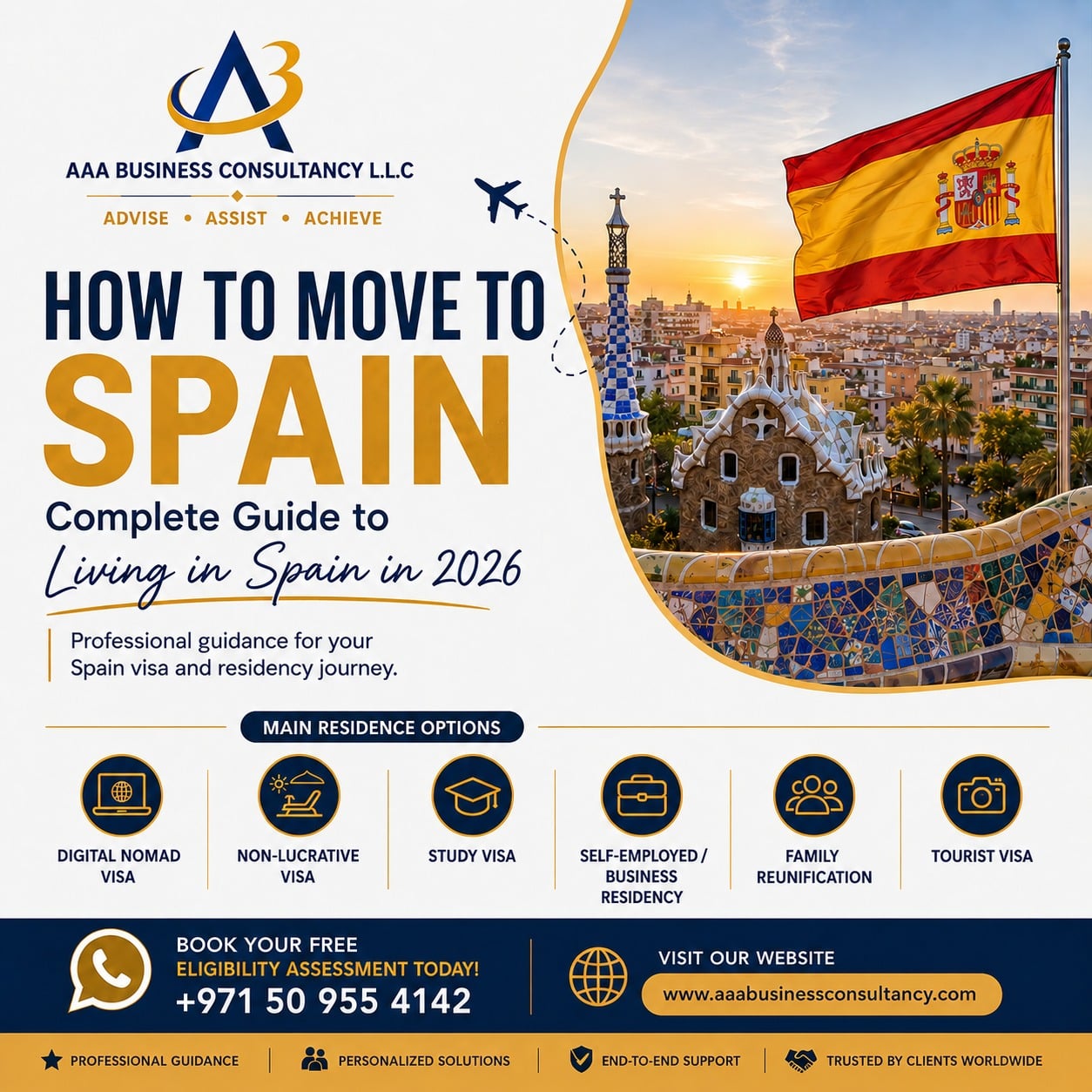
This guide explains the main things you need to know if you are planning to move to Spain in 2026.
Can Foreigners Move to Spain?
Yes. Foreign nationals can move to Spain provided they meet the requirements of the appropriate visa or residence route.
The first step is to understand why you want to move to Spain.
Are you planning to:
- Work remotely for a foreign company?
- Start a business or work as a self-employed professional?
- Retire or live in Spain without working?
- Study at a Spanish educational institution?
- Join a family member already living in Spain?
- Visit Spain temporarily as a tourist?
Your answer can determine which visa or residence route may be appropriate.
What Visa Do You Need to Move to Spain?
There is no single visa for everyone who wants to move to Spain. Spain offers different visa and residence options depending on an applicant’s circumstances.
1. Spain Digital Nomad Visa
The Digital Nomad Visa is designed for eligible remote workers and professionals who work for companies or clients outside Spain, subject to the applicable requirements.
It can be particularly relevant for:
- Employees working remotely
- Freelancers and self-employed professionals
- Entrepreneurs with international business activities
- Professionals seeking to live in Spain while continuing qualifying remote work
Applicants generally need to demonstrate their professional relationship, sufficient financial means and other required conditions.
2. Non-Lucrative Visa
The Non-Lucrative Visa may be suitable for individuals who want to live in Spain without carrying out employment or professional activities in Spain.
It can be considered by people who have sufficient financial resources and want to relocate for reasons such as:
- Retirement
- Personal relocation
- Family lifestyle
- Long-term residence
Financial requirements and supporting documentation are important parts of the application.
3. Self-Employed or Business Residency
People who intend to establish or operate a business or carry out self-employed professional activity in Spain may have different residence options available to them.
Depending on the route, applicants may need to demonstrate:
- A viable business or professional plan
- Relevant experience or qualifications
- Financial resources
- The ability to support the proposed activity
- Appropriate documentation
The correct route depends heavily on the nature of the proposed business or professional activity.
4. Study Visa
Spain is also a popular destination for international students.
Students may apply for the appropriate study authorization when accepted into an eligible educational programme.
Depending on the programme and circumstances, studying in Spain can also provide opportunities to remain connected to Spain after completing studies, subject to the applicable rules and eligibility requirements.
5. Family Reunification
If you already have an eligible family member legally residing in Spain, you may have a family reunification route available.
The requirements depend on factors such as:
- The relationship between family members
- The sponsor’s residence status
- Financial circumstances
- Accommodation
- Supporting documentation
How Much Money Do You Need to Move to Spain?
There is no single amount that applies to everyone.
Financial requirements vary depending on the visa or residence route you are applying for.
You may need to demonstrate sufficient financial resources to cover your living expenses and, where applicable, those of accompanying family members.
You should also budget for expenses such as:
- Visa or administrative fees
- Accommodation
- Health insurance where required
- Document legalisation
- Sworn translations
- Travel costs
- Initial living expenses
- Professional or consultancy fees, if applicable
It is important to distinguish between the official financial requirement for your visa and the actual amount you may need to comfortably establish yourself in Spain.
Where Is the Best Place to Live in Spain?
The best city depends on your lifestyle, budget and personal priorities.
Madrid
Madrid is Spain’s capital and a major centre for business, employment, education and international communities.
Barcelona
Barcelona combines a major international business environment with beaches, culture and a Mediterranean lifestyle.
Valencia
Valencia offers a combination of city life, beaches and a potentially more affordable lifestyle than Madrid or Barcelona.
Málaga
Málaga has become particularly attractive to international professionals, remote workers and families looking for a warmer climate and coastal lifestyle.
Alicante
Alicante is another popular option for international residents, particularly those looking for a coastal environment and a potentially lower cost of living than Spain’s largest cities.
The right location should be considered alongside your employment, family, budget and long-term plans.
What Is the Cost of Living in Spain?
The cost of living varies significantly depending on where you live.
Housing is usually one of the largest expenses, and prices can differ considerably between major cities, coastal areas and smaller towns.
Your monthly budget may include:
- Rent or mortgage
- Utilities
- Food and groceries
- Transportation
- Healthcare and insurance
- Education
- Leisure
- Internet and mobile services
Madrid and Barcelona generally have higher housing costs, while some smaller cities and towns can offer more affordable options.
Before relocating, it is advisable to research the specific city or region rather than relying on a national average.
Can You Bring Your Family to Spain?
In many circumstances, yes.
However, whether family members can accompany or join you depends on the residence route and the circumstances of your family.
Depending on the applicable rules, family members may include a spouse or partner, children and certain other eligible relatives.
If you are planning to move with your family, it is important to consider everyone’s documentation and eligibility before beginning the application process.
How Long Does It Take to Move to Spain?
Processing times can vary depending on:
- The visa or residence route
- Where you apply
- The completeness of your application
- Document preparation
- Consular or administrative workload
- Whether additional documentation is requested
One of the most common causes of avoidable delays is submitting incomplete or incorrectly prepared documentation.
For this reason, preparation should begin well before your intended relocation date.
What Documents Do You Usually Need?
The exact documentation depends on the visa or residence route, but applicants may be asked for documents such as:
- Valid passport
- Visa application forms
- Passport photographs
- Proof of financial means
- Employment or professional documents
- Accommodation-related documents
- Health insurance
- Criminal record certificate, where applicable
- Medical certificate, where applicable
- Civil-status documents, where applicable
- Educational or professional qualifications
- Legalised or apostilled documents
- Official Spanish translations where required
Do not assume that another applicant’s document checklist will automatically apply to your case.
Requirements can differ according to the applicant and the residence route.
Common Mistakes People Make When Moving to Spain
Relying on someone else’s experience
A friend or family member may have successfully obtained a Spanish visa, but their circumstances may be completely different from yours.
Choosing the wrong visa route
Applying for a route simply because it worked for someone else can create unnecessary complications.
Preparing documents too late
Some documents may require legalisation, apostille or sworn translation, which can take additional time.
Ignoring financial requirements
Having savings does not necessarily mean that you meet the specific financial requirements of your chosen residence route.
Not planning for life after arrival
Getting the visa is only one part of relocating. You should also consider accommodation, registration, healthcare, banking, education and other practical matters.
A Simple Checklist Before Moving to Spain
Before starting your application, consider the following:
1. Determine your purpose
Why do you want to live in Spain?
2. Identify the appropriate visa or residence route
Your personal circumstances should determine the route.
3. Check the financial requirements
Make sure you understand the applicable financial criteria.
4. Prepare your documentation
Allow sufficient time for legalisation, apostille and translation where required.
5. Plan your accommodation
Research the city and housing market before relocating.
6. Consider your family
If you are moving with family members, review their requirements as well.
7. Plan your finances
Budget for both the application and your initial months in Spain.
8. Prepare for life in Spain
Consider healthcare, banking, transportation, education and other practical matters.
Is Moving to Spain Worth It in 2026?
For many people, Spain can offer an attractive combination of lifestyle, climate, infrastructure, education, healthcare and access to the wider European environment.
However, Spain is not necessarily the right choice for everyone, and the most suitable visa depends on your individual circumstances.
The most important step is therefore not simply asking, “Which Spanish visa is easiest?”
Instead, ask:
“Which Spanish residence option is appropriate for my circumstances and long-term plans?”
Planning to Move to Spain?
Moving to Spain is a major decision, and proper preparation can make the process much easier.
At AAA Business Consultancy, we provide Spain Visa & Residency Services and assist clients in understanding their available options, preparing documentation and navigating the application process.
Whether you are considering a Digital Nomad Visa, Non-Lucrative Visa, business or self-employed residence, family reunification, study visa or another Spain residence option, your eligibility should be assessed based on your individual circumstances.
Ready to Start Your Journey to Spain?
If you are planning to move to Spain and are unsure which visa or residency option may be suitable for you, contact our team for professional guidance.
📞 Call / WhatsApp: +971 50 955 4142
📧 Email: info@aaabusinessconsultancy.com
🌐 Website: www.aaabusinessconsultancy.com
AAA Business Consultancy
Spain Visa & Residency Services
Advise • Assist • Achieve 🇪🇸